
Beyond the Ceasefire Rally: Decoding the Hidden Market Logic of Geopolitical Shocks
The April 8th Anomaly: A Record Rally in Context
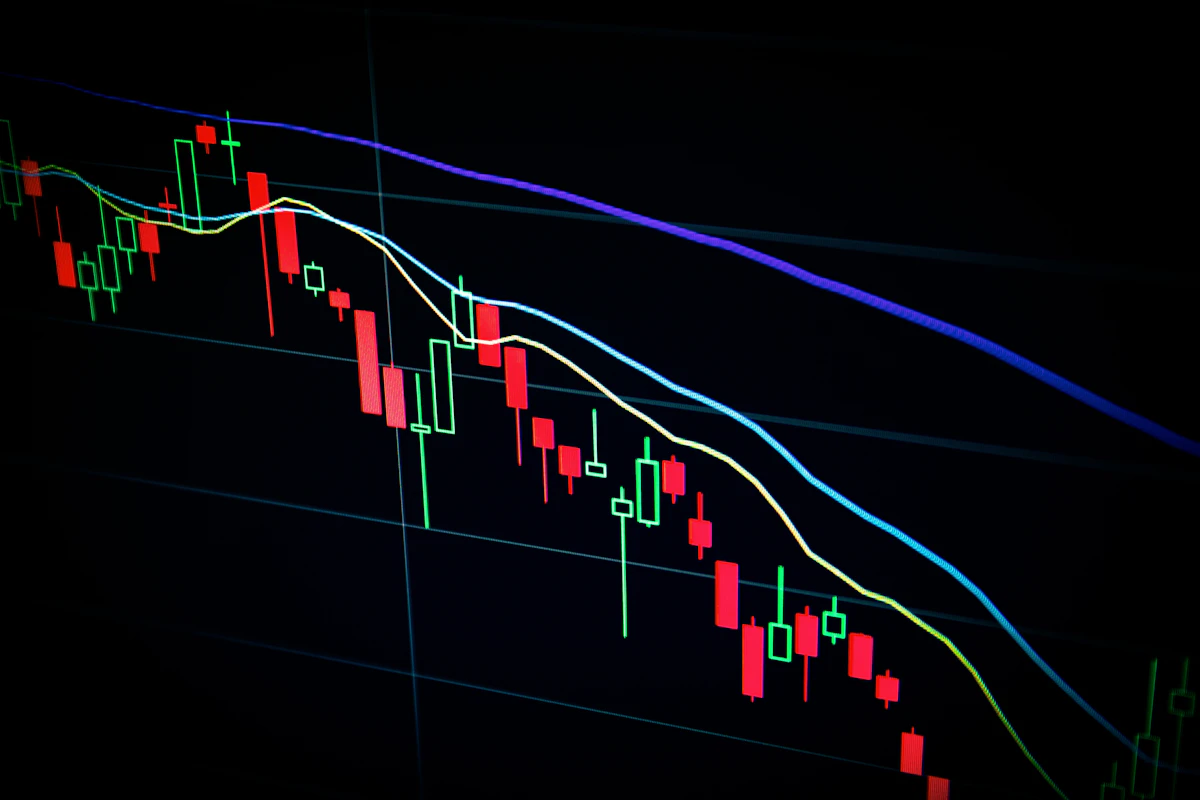
On April 8, 2026, European equity markets staged their most substantial single-day advance in twelve months. The STOXX Europe 600 Index closed with a gain exceeding 3.5%, while major national indices including the DAX, CAC 40, and FTSE 100 recorded similarly significant surges. The immediate catalyst was the simultaneous announcement from Washington and Tehran confirming a formal ceasefire agreement, concluding a period of prolonged military tension. This event represents a peak manifestation of accumulated geopolitical risk rather than an isolated market anomaly. The scale of the rally was directly proportional to the magnitude of the risk premium that had been embedded in asset prices during the preceding conflict phase.
*Infographic: A comparative chart showing the scale of the April 8, 2026 rally against other major European market rallies over the past five years.*
Deconstructing 'Geopolitical Beta': The Hidden Market Algorithm
Financial markets operate with a discernible, albeit complex, algorithm for geopolitical risk. This mechanism, often termed 'geopolitical beta,' describes the systematic process by which markets price and re-price risk premiums tied to state actions and conflicts. The ceasefire announcement triggered a classic 'relief valve' mechanism. The buying pressure witnessed was not primarily driven by new positive fundamentals but by the rapid unwinding of the excessive risk premium that had suppressed valuations.
Historical analysis establishes a pattern. Market reactions to the de-escalation of the 2015 Iran nuclear negotiations, the initial phases of the US-China trade truce in 2019, and various pauses in the Russia-Ukraine conflict in the early 2020s followed a similar, though less pronounced, trajectory. In each case, the rally on de-escalation was disproportionately larger than the initial decline on escalation, a phenomenon documented in volatility studies by institutions like the Bank for International Settlements. This asymmetry occurs because the initial risk pricing incorporates unknown tail risks, while de-escalation concretely removes a portion of that uncertainty.
*Conceptual Diagram: A flow chart illustrating the sequence: Geopolitical Event -> Risk Premium Inflation -> Ceasefire Announcement -> Premium Unwinding -> Disproportionate Market Rally.*
Sectoral Winners and the Illusion of Broad Strength
The rally’s strength was not uniform across the European market. A sectoral analysis reveals its selective nature, driven by sectors with high sensitivity to geopolitical risk and global trade stability. Automotive and industrial stocks were among the top performers, as the ceasefire reduced immediate threats to supply chains and buoyed expectations for global capital expenditure. Energy-sensitive sectors, including chemicals and transportation, advanced on the anticipated stabilization and potential decline in crude oil prices.
In contrast, traditional defensive sectors—such as utilities and consumer staples—underperformed the broader market surge. This divergence underscores that the rally was a specific recalibration of risk tied to global growth and input cost assumptions, not a broad-based revaluation of all corporate assets. The performance pattern aligns with historical correlations where cyclical sectors demonstrate higher 'geopolitical beta' compared to defensives.
*Bar Chart: A simulated performance chart showing the relative gains of European market sectors (Energy, Industrials, Financials, Automotive, Consumer Staples, Utilities) on April 8, 2026.*
The Sustainability Question: Sentiment vs. Fundamental Repair
The critical inquiry following such an event-driven rally concerns its sustainability. Gains predicated on sentiment shifts and premium unwinding are inherently vulnerable if not followed by a corresponding improvement in fundamental economic and corporate conditions. The ceasefire removes an immediate downside risk but does not, in itself, generate new revenue streams, enhance productivity, or increase corporate earnings power for European firms.
The lag between market euphoria and tangible fundamental repair can be significant. Corporate earnings revisions, capital investment plans, and consumer confidence indices will require time to reflect the new, less volatile geopolitical landscape. The rally exposes a core vulnerability of modern markets: an over-sensitivity to headline-driven volatility that can decouple price from underlying value for extended periods. The durability of the April 8 gains will be tested by subsequent economic data releases, central bank policy decisions, and the actual implementation of the ceasefire terms.
The New Paradigm: Geopolitical Risk as a Core Financial Variable
The April 8, 2026 event confirms the emergence of a new investment paradigm where geopolitical risk assessment is no longer a peripheral concern but a core financial variable integrated directly into valuation models. The efficient frontier for portfolio construction now explicitly includes geopolitical stress scenarios. Asset allocators are compelled to model not only economic cycles and interest rate paths but also conflict probabilities, diplomatic channels, and commodity corridor security.
This paradigm demands analytical frameworks that separate transient sentiment shocks from structural shifts in risk premiums. For European equities, the key question is whether this event leads to a permanent re-rating of the region's risk premium, making it more attractive relative to other global markets, or if it is merely a temporary reprieve. Evidence suggests that only a sustained period of geopolitical stability, coupled with demonstrable improvements in European economic fundamentals, can effect a permanent re-rating.
Neutral Market Prediction
Based on the analysis of cause, effect, and historical precedent, the trajectory for European markets following the initial rally is likely to bifurcate. In the short term (1-3 months), markets may experience heightened volatility and potential partial retracement as the initial euphoria subsides and focus returns to macroeconomic indicators and corporate earnings season. The ceasefire has altered the risk landscape but not the fundamental challenges of growth, inflation, and monetary policy.
The medium-term outlook (6-18 months) is contingent upon two factors: the successful maintenance of the geopolitical agreement and its translation into tangible economic benefits, such as lower energy price volatility and improved trade confidence. Should these conditions materialize, the initial rally may form a sustainable base for a gradual, fundamentals-driven upward trend in European equities, particularly in previously depressed cyclical sectors. If the agreement falters, the unwound risk premium will be rapidly reinstated, potentially erasing the gains and reinforcing the market’s hypersensitivity to geopolitical headlines. The event of April 8 serves as a powerful case study in this ongoing recalibration.